Introduction
The XAUUSD liquidity sweep strategy is one of the most effective ways to trade gold using smart money concepts and session liquidity behavior.
This strategy focuses on:
- London session highs and lows
- liquidity sweeps during New York session
- IFVG (Inverse Fair Value Gap) confirmation
- high probability reversals
Gold frequently attacks liquidity before reversing direction. Understanding this behavior allows traders to avoid chasing moves and instead enter after manipulation phases.
- In this guide, you will learn a structured and practical approach to trading gold, focused on improving consistency, reducing emotional decisions, and understanding how price behaves in real market conditions. This is not theory-heavy content — it is a rule-based framework based on market structure, timing, and risk management.
What Is the XAUUSD Liquidity Sweep Strategy?
This strategy is based on the idea that price often takes liquidity above highs or below lows before reversing.
In this setup:
- London session creates liquidity levels
- New York session sweeps those levels
- price forms IFVG confirmation in 1M Timeframe
- reversal entry becomes available
This approach is popular among:
- smart money traders
- intraday traders
- XAUUSD scalpers
This guide explains the IFVG entry model on XAUUSD. For a deeper understanding of market structure and other trading concepts, you can explore the full Technical Analysis section
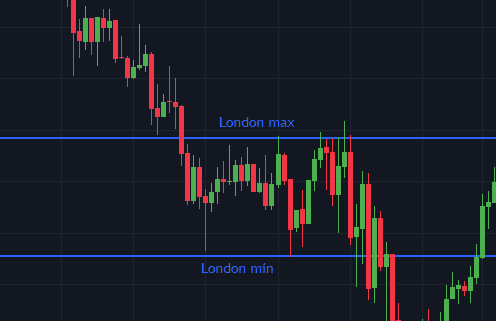
Step 1 — Mark London Session Highs and Lows in
The first step of the XAUUSD liquidity sweep strategy is marking:
- London session high
- London session low
It is important to understand the London session in New York time, especially for XAUUSD trading, as most liquidity and volatility occur during this period. The London session runs from 03:00 AM to 12:00 PM New York time (EST/EDT).
These levels act as liquidity pools where stop losses accumulate.
Why does this matter?
Because institutions often target these zones before reversing the market.
Step 2 — Wait for New York Session Manipulation in 1M Timeframe
During New York session:
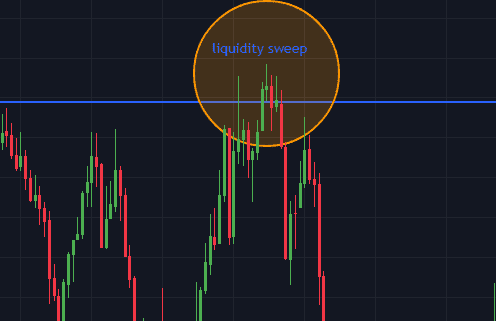
- price often sweeps London highs
- or sweeps London lows
This is called a liquidity grab or liquidity sweep. Very common in XAUUSD.
Many retail traders incorrectly enter breakout trades at this moment. Patience is key in trading. Avoid letting emotions or thoughts drive your decisions, and do not enter trades out of fear of missing out. Wait for your setup and execute with discipline and clarity.
Instead of chasing the breakout, this strategy waits for reversal confirmation using IFVG.
Step 3 — Look for IFVG Confirmation
After liquidity is taken, wait for:
- market structure shift
- displacement move
- IFVG formation
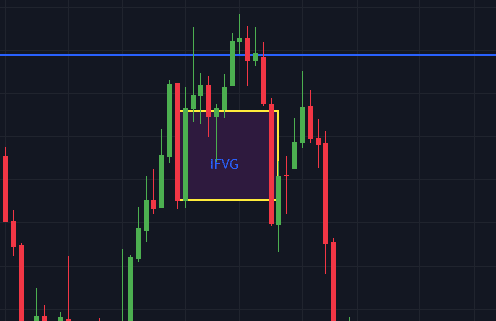
IFVG formation -1M Timeframe- on XAUUSD chart-Tradingview
The IFVG (Inverse Fair Value Gap) confirms that momentum is shifting in the opposite direction.
This is the most important confirmation step of the strategy. IFVG confirmation depends on understanding market structure, liquidity and inefficiencies. If you can’t properly identify a valid IFVG, your trade is already at a disadvantage and is far more likely to fail.
Step 4 — Entry Rules
These rules are strict conditions within the XAUUSD liquidity sweep strategy. If they are not met, you do not enter the market. If even one of these conditions is missing, the setup is considered invalid and should be skipped. Trading without full confirmation leads to low-quality execution, emotional decisions, and unnecessary losses.
BUY Setup
- London low gets swept
- displacement to upside appears
- bullish IFVG forms
- entry on retracement into IFVG
SELL Setup
- London high gets swept
- bearish displacement appears
- bearish IFVG forms
- entry on retracement into IFVG
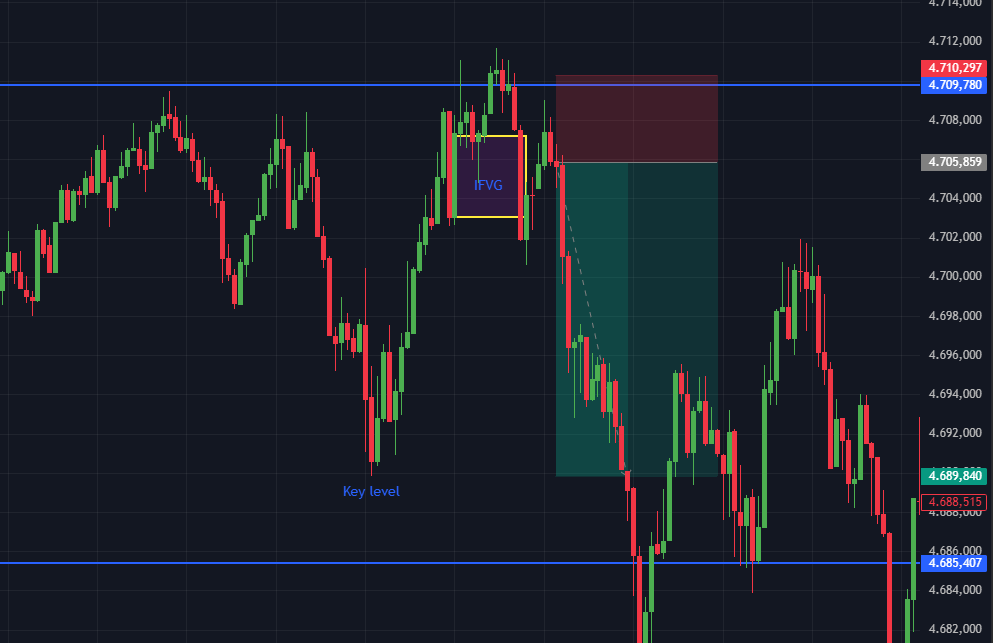
Step 5 — Risk Management & Active Trade Management
Capital Protection and Trade Control
Risk management is not only about protecting your account before entering a trade, but also about managing the position while it develops.
Every XAUUSD trade must be defined in advance with clear parameters:
- Entry price
- Stop loss level
- Take profit targets
- Risk-to-reward ratio (RR)
A minimum 1:2 risk-reward ratio should always be respected to ensure long-term profitability.
Stop Loss Placement
Your stop loss (SL) must be placed at a logical invalidation point, not randomly.
In XAUUSD trading, this is usually:
- Above the recent swing high (for sell setups)
- Below the recent swing low (for buy setups)
The stop loss defines when your trade idea is completely invalid.
Take Profit & Target Zones
Profits should not be managed emotionally. You should always define take profit (TP) levels based on liquidity and key market zones.
Common target areas include:
- Previous highs and lows (liquidity pools)
- Session highs/lows (London / New York)
- Key structure levels
- Imbalance or inefficiency zones
Instead of using a single take profit, it is more effective to scale out using multiple targets (TP1, TP2, TP3) depending on price movement.
Risk-to-Reward Execution
Before entering any trade, you must calculate your risk-to-reward ratio (RR).
Example:
- Risk: 10 pips (Stop Loss)
- Reward: 20–30 pips (Take Profit)
- Result: 1:2 or 1:3 RR setup
If the setup does not offer a clean RR, you should avoid the trade completely. If you are unsure how to calculate risk before taking a trade, you can refer to this complete Risk Managment guide
Active Trade Management
Once the trade is active, management becomes just as important as entry.
Key rules:
- When price moves in your favor, consider moving stop loss to breakeven (BE) to eliminate risk.
- Do not move SL too early; wait for structure confirmation.
- Take partial profits at predefined targets (TP1, TP2).
- Let the remaining position run toward higher target zones if momentum continues.
This allows you to secure profits while still participating in larger moves.
Summary of Execution Rules
A proper XAUUSD trade should always include:
- Defined entry
- Logical stop loss
- Pre-planned take profit levels
- Clear risk-to-reward ratio
- Active management using breakeven and partials
- Targeting key liquidity zones
Conclusion
The XAUUSD liquidity sweep strategy is a structured trading framework that focuses on how gold seeks liquidity before making its true directional move. Instead of predicting price, it teaches you to read market behavior through liquidity grabs, session timing, and structural shifts.
At its core, this strategy is built around one principle: price must first take liquidity before it expands in a clean direction. Once you understand this, your decision-making becomes far more systematic and less emotional.
By applying the full model — from identifying the London range, waiting for liquidity sweeps during New York, and confirming entry through market structure shifts — you create a repeatable process for execution rather than guessing.
Risk management is what makes this approach sustainable. Every trade should include a defined stop loss, clear take profit targets, and a minimum risk-to-reward ratio, while active management (such as moving to breakeven and scaling out at target zones) helps protect capital and lock in profits during extended moves.
Ultimately, the XAUUSD liquidity sweep strategy is not about taking more trades, but about taking only the right ones — where liquidity, structure, and timing align. Consistency comes from discipline, not frequency, and execution always matters more than prediction.
Frequently Asked questions About the XAUUSD liquidity sweep strategy
Is the XAUUSD liquidity sweep strategy suitable for beginners?
The XAUUSD liquidity sweep strategy is not recommended as a first strategy for complete beginners. It requires a solid understanding of market structure, liquidity concepts, session timing, and smart money principles. However, traders with 3-6 months of foundational study who understand support and resistance, candlestick patterns, and basic risk management can absolutely learn and apply this framework. Start by studying it on a demo account for at least 4-6 weeks before risking real capital.
What timeframe works best for this strategy?
The optimal approach uses a multi-timeframe analysis. Use the 4-hour chart to determine the overall market bias and identify major liquidity levels. Drop to the 1-hour chart to track session structure and confirm the sweep. Finally, use the 15-minute chart for precise entry timing after IFVG confirmation. Never trade this strategy on timeframes below 15 minutes — the noise makes setups unreliable and increases false signals significantly.
How many valid setups does this strategy generate per day?
Expect 1-3 valid setups on active trading days. Many days will produce zero setups that meet all five criteria simultaneously. This is completely normal and expected. The biggest mistake traders make with this strategy is forcing trades when conditions are not perfect. Patience is not optional — it is a core part of the edge. A week with 3 high-quality trades will always outperform a week with 15 mediocre ones.
What win rate can I expect from the XAUUSD liquidity sweep strategy?
Traders who apply all five steps with strict discipline consistently report win rates between 55% and 65%. When combined with a minimum 1:2 risk-to-reward ratio, a 55% win rate produces strong long-term profitability. However, win rate alone means nothing without proper risk management. A trader with a 45% win rate and a 1:3 RR ratio will outperform a trader with a 65% win rate and a 1:1 RR ratio every single time.
Why does gold (XAUUSD) respond so well to liquidity sweeps?
Gold is one of the most institutionally traded assets in the world. Large banks, hedge funds, and central banks move enormous positions in XAUUSD daily. These institutions need liquidity to fill their orders — and liquidity pools above session highs and below session lows are exactly where retail stop losses accumulate. By understanding where institutions hunt for liquidity, retail traders can align with smart money instead of becoming its victim.
Can this strategy be combined with other trading approaches?
Yes. The XAUUSD liquidity sweep strategy pairs exceptionally well with order block analysis, fair value gaps, and Fibonacci retracement levels for entry refinement. Many traders also combine it with economic calendar awareness — avoiding entries during high-impact news events like NFP, CPI, or Federal Reserve announcements, when price behavior becomes erratic and unpredictable.